Showing posts with label accuracy. Show all posts

Thursday, February 21, 2013

Out-of-Class #1: More Accuracy Advice


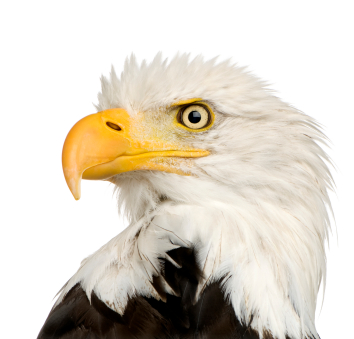
Get Your Eagle Eye On: 10 Tips for Proofreading Your Own Work

A guest post by Leah McClellan of Peaceful Planet

The best blog post I read this morning—of many—is good. Very good, actually. It flows. It’s fresh. It has a rhythm that drew me in and made me want to read every word. The ideas are thought-provoking.
But how much more enjoyable would it have been if I didn’t have to reread certain sections to make sure I was getting the gist of things? How much better would the post be if I didn’t hesitate at it’s instead of its and there instead of they’re? How much intended meaning and power was lost over a lack of subject-verb agreement or commas that might have been better placed?
Tripping, stumbling, and hesitating over misspelled words or ill-placed punctuation is like watching a TV show with a shaky cable signal or trying to talk while a cell phone connection is breaking up—the reader is jostled right out of the story the writer is telling.

If the errors are too big or too many, I’m outta there.

This writer intentionally broke a lot of rules in his 1100-word article, and he broke them well. Sentence fragments clustered together as ideas to ponder, a long list of items without commas that symbolizes repetitive drivel, the same word repeated over and over in a few short sentences to pound in a point. Good stuff and well done, for the most part.
Some grammar and punctuation rules can—and should—be broken, when you know what the rules are and how to break them effectively. But the lack of solid proofreading in this piece is like cake without icing, pottery without glaze, or a fine piece of wood in need of a polish. The writer didn’t step back and get his Eagle Eye on.
“Come on,” you chortle. “It’s hard to proofread your own work. And who notices anyway?”
Believe it or not, lots of people notice unless they’re just scanning. And it’s quite possible that many of those scanners might linger on every word you write if typos and bloopers and unintentionally-broken punctuation or grammar rules weren’t making them stumble and wonder and lose their focus.

Typos and errors break up the “voice” that readers are trying to hear as they read your written words.

It doesn’t matter whether you’re a freelancer, a blogger, a student, or anyone who writes for any reason. Most of us don’t have proofreaders or a skilled family member or friend to help us out on a regular basis. And if you’re submitting work to an agent or publisher or a big blog for consideration, why let typos and mistakes clutter and cloud the brilliant work you want them to read?
Any time you write something, you want readers to enjoy and appreciate your masterpiece. It’s your baby, an extension of yourself. Take good care of it.

Writing and editing is art. Proofreading is science.

So says Rushang Shah, President of Gramlee.com, an online editing service with editors behind the scenes constantly proofreading and copyediting. Rushang says that “all proofreading and copyediting involves the human element, and that’s why computers cannot replace a proofreader.”
Proofreading your own work can be challenging, it’s true. You already know the story, you already have a picture in your mind of what to expect and, as a result, you tend to skim over words and groups of words. Plus, you know your own voice and, even if there are errors in your writing, you don’t “hear” them or see them because you’re in a hurry, and your mind fills in the blanks as you skim over things. You might be daydreaming—even if you’re reading out loud.
If you have a system, though, proofreading can be like doing a quality check on an assembly line. It’s just busy work, really, and not very creative at all. But it’s so important.

Here are some tips to help you get your Eagle Eye on and proofread your own work like a pro.

1. Don’t proofread until you’re completely finished with the actual writing and editing. If you make major changes while proofreading, even if it’s just within sentences, you’re still in an artistic, creative mode, not a science mode.
2. Make sure you have no distractions or potential interruptions. Shut down email and social media, hide the cell phone, shut off the TV, radio, or music, and close the door. Print your document if you need to get away from the computer altogether.
3. Forget the content or story. Analyze sentence by sentence; don’t read in your usual way. Focus on spelling, grammar, and punctuation. Work backwards, if that helps, or say the words and sentences out loud. Concentrate.
4. Make several passes for different types of errors. Try checking spelling and end punctuation on one pass, grammar and internal punctuation on another, and links or format on yet another pass. Develop a system.
5. Take notes. If you notice a format issue while checking spelling or if you need to look something up, make a quick note and come back to it so you don’t lose your focus.
6. If you do make a last-minute change to a few words, be sure to check the entire sentence or even paragraph over again. Many errors are the result of changes made without adjusting other, related words.
7. Check facts, dates, quotes, tables, references, text boxes, and anything repetitive or outside of the main text separately. Focus on one element or several related aspects of your writing at a time.
8. Monitor yourself. If you find yourself drifting off and thinking about something else, go back over that section again. Try slapping your hand or tapping a foot in a rhythm as you examine each word and sentence out loud.
9. Get familiar with your frequent mistakes. Even the most expreienced writer mixes up their, they’re, and there or too, two, and to. When I’m tried or writing fast, I right what I here in my mind and just get careless. Not a big deal. That’s what proofreading is for. You caught those errors, didn’t you?
10. Check format last. Every document has format, even an email, whether it’s paragraph spacing, text wrap, indentations, spaces above and below a bullet list or between subheadings and text, and so on. Leave this for the end because contents may shift during handling.
You already know better than to rely on spell-check, so I won’t belabor the point except to say that “wear form he untied stats” doesn’t bother spell-check but it might get an American in trouble at a customs checkpoint.

What if you don’t quite know what you’re looking for while proofreading?

Do you know basic comma rules, how to use a semi-colon, or when to use who or whom? You might have an excellent sense of what things should look like or sound like, especially if you’re an avid reader, but if you don’t know basic grammar and punctuation rules, proofreading might be guesswork, at best, with doubtful results, at worst. Why not make your life easier and your writing better? Take some time to learn basic rules from some online resources I consult when I need help:

Grammar Girl: Quick and Dirty Tips
Purdue Online Writing Lab: General Writing Resources
Oxford Dictionaries: Better Writing
GrammarBook.com

You can also download a free copy of The Handy-Dandy Everybody’s Guide to Proofreading over at my blog, Peaceful Planet.

Don’t let mistakes tarnish your work of art, whether it’s a research paper, a blog post, a query letter, or business communication. And remember, proofreading is not the same as writing and editing. It’s not about creativity; it’s a science that needs a system. Follow these tips and create your own system, and you’ll have your Eagle Eye on in no time.

Leah McClellan is a freelance writer, copyeditor, proofreader, gardener, vegetarian, and animal lover who dreams of world peace and writes about communication at Peaceful Planet.

Tuesday, February 19, 2013

Missing: Accuracy Checklist


For those of you suffering a fatals streak, please sloooow down. Start devoting a larger share of writing time to fact-checking. I'd rather have you right short than wrong. And start using the accuracy checklist I passed out during the first few weeks of class. If you can't find it, here's the content:

One note: I know in this class we can't print things out. But we can use a sheet of paper to write out every fact, name, title and so on as we go through a digital copy of the story.

And for out-of-class stories, I would expect these checklists to be followed to the smallest detail.

ACCURACY CHECKLIST FOR JOURNALISTS

Created by the Reynolds School for Business Journalism
Distributed by the Poynter Institute for Journalism

Instructions

After completing your story, use the down arrow on your keyboard to highlight and then complete each of these checks.

I. Facts

Check these first three items while your story is on the screen:

1. Run spell-check, review suggestions and correct any actual errors.
2. Click hyperlinks.
3. Call phone numbers.

Use a printout of the story for the remaining checks:

4. Put a ruler under each line as you read the text. Underline every fact, and then double-check each one, including:

a) Names and titles of people, places and companies - Also, does each second reference (Jones) have a first reference (Mary Jones)?

b) Numbers and calculations - Do the numbers add up? Is it millions or billions? Are the percentages correct?

c) Dates and ages - Watch references to “next month/last month” when the month is changing.

d) Quotes - Are quotes accurate and properly attributed? Have you fully captured what each person meant?

e) Superlatives - What’s your source that something is the biggest, oldest, etc.?

II. Grammar

5. Check each sentence for correct use of:

a) Subject-verb agreement - Also, are you consistent in your use of either the present or the past tense to tell the story?

b) Pronoun-noun agreement.


c) Plurals and possessives.

d) Punctuation.

III. Spelling

6. Read the story backwards, checking the spelling of each word. Use a dictionary.

IV. Fairness and context

7. Terms - Define or eliminate unfamiliar terms, such as acronyms and jargon.

8. Fairness - Have all stakeholders been contacted and given a chance to talk?

9. Missing - Does the story leave any important question unanswered?

10. Context - Does the reader have the context to understand the story?

V. Your own common errors (for example, if you have a habit of getting dates wrong, misspelling names, ect.)

11. ____________________________________________

12.____________________________________________

VI. Final checks

13. Read the story aloud.

14. Have someone else read it. 

15. Accompanying elements - Run the previous checks on the story's headlines, captions, sidebars, photos, graphics, videos, interactive media and podcasts. Check for inconsistencies.

Missing: Ways To Solve Inaccuracy

This is a modified version of an editor's checklist on how to help reporters solve inaccuracy problems. I think there are some tips worth following. Let's take a look:

Problem: Not detail-oriented. Plan to ask at least five extra questions not covered in your assignment that go into greater detail; keep asking clarifying questions.

Problem: Making assumptions. Reports should back up statements in story with evidence; reporters should take their time and not rush during interviews; reporters should self-edit religiously and ask themselves if they can back up what they are writing; reporters should ask sources follow-up questions; reporters should ask the obvious questions to make sure they're not assuming; reporters should ask, "How do you know that? and "how do I know that?" of themselves and sources.

Problem: Interviewing confusion. Reporters shouldn't be shy about asking sources to slow down or repeat something; reporters ask "can you elaborate?" or say, "I don't understand"; reporters can repeat the information back to the source in their own words and give the source the opportunity to correct them; reporters can go back over direct quotes with the source; reporters can make a recording of events or interviews that can be checked.

Problem: Relying on out-of-date information. Never type something before you've checked it; always ask sources for an updated title; do research ahead of time; check Web sites for the last time they were updated and if it's been more than one year, then the information might be old; check the date on press releases.

Problem: Time constraints. Plan ahead for a long day -- start doing research the night before or get up early to get all your reporting done on time; overestimate the time everything will take; start writing what you know while waiting for that last callback, it might also help you find out earlier what you don't know; don't multitask during the editing process; keep fact-checking.

Problem: Exaggerating/using more powerful words than your reporting shows. Use precise language; use self-discipline and resist the urge to overwrite or overstate the facts; always attribute it. If you can't attribute some part of your story, then perhaps your words are wrong; reporters should use balanced reporting and make sure that it's reflected in the writing of the story; reporters should put the facts in the proper context.

Problem: Relying on unreliable sources. Reporters can ask sources for another source or documents to back up what they tell you; reporters should vet sources' credibility during interviews. Does what they're saying make sense? Always ask, "How do you know that?"

Wednesday, October 10, 2012

Out-of-Class #1/Sleep: Accuracy Checklist


For those of you suffering a fatals streak, please sloooow down. Start devoting a larger share of writing time to fact-checking. I'd rather have you right short than wrong. And start using the accuracy checklist I passed out during the first few weeks of class. If you can't find it, here's the content:

One note: I know in this class we can't print things out. But we can use a sheet of paper to write out every fact, name, title and so on as we go through a digital copy of the story.

And for out-of-class stories, I would expect these checklists to be followed to the smallest detail.

ACCURACY CHECKLIST FOR JOURNALISTS

Created by the Reynolds School for Business Journalism
Distributed by the Poynter Institute for Journalism

Instructions

After completing your story, use the down arrow on your keyboard to highlight and then complete each of these checks.

I. Facts

Check these first three items while your story is on the screen:

1. Run spell-check, review suggestions and correct any actual errors.
2. Click hyperlinks.
3. Call phone numbers.

Use a printout of the story for the remaining checks:

4. Put a ruler under each line as you read the text. Underline every fact, and then double-check each one, including:

a) Names and titles of people, places and companies - Also, does each second reference (Jones) have a first reference (Mary Jones)?

b) Numbers and calculations - Do the numbers add up? Is it millions or billions? Are the percentages correct?

c) Dates and ages - Watch references to “next month/last month” when the month is changing.

d) Quotes - Are quotes accurate and properly attributed? Have you fully captured what each person meant?

e) Superlatives - What’s your source that something is the biggest, oldest, etc.?

II. Grammar

5. Check each sentence for correct use of:

a) Subject-verb agreement - Also, are you consistent in your use of either the present or the past tense to tell the story?

b) Pronoun-noun agreement.


c) Plurals and possessives.

d) Punctuation.

III. Spelling

6. Read the story backwards, checking the spelling of each word. Use a dictionary.

IV. Fairness and context

7. Terms - Define or eliminate unfamiliar terms, such as acronyms and jargon.

8. Fairness - Have all stakeholders been contacted and given a chance to talk?

9. Missing - Does the story leave any important question unanswered?

10. Context - Does the reader have the context to understand the story?

V. Your own common errors (for example, if you have a habit of getting dates wrong, misspelling names, ect.)

11. ____________________________________________

12.____________________________________________

VI. Final checks

13. Read the story aloud.

14. Have someone else read it. 

15. Accompanying elements - Run the previous checks on the story's headlines, captions, sidebars, photos, graphics, videos, interactive media and podcasts. Check for inconsistencies.

Out-of-Class #1/Sleep: Ways To Solve Inaccuracy:

This is a modified version of an editor's checklist on how to help reporters solve inaccuracy problems. I think there are some tips worth following. Let's take a look:

Problem: Not detail-oriented. Plan to ask at least five extra questions not covered in your assignment that go into greater detail; keep asking clarifying questions.

Problem: Making assumptions. Reports should back up statements in story with evidence; reporters should take their time and not rush during interviews; reporters should self-edit religiously and ask themselves if they can back up what they are writing; reporters should ask sources follow-up questions; reporters should ask the obvious questions to make sure they're not assuming; reporters should ask, "How do you know that? and "how do I know that?" of themselves and sources.

Problem: Interviewing confusion. Reporters shouldn't be shy about asking sources to slow down or repeat something; reporters ask "can you elaborate?" or say, "I don't understand"; reporters can repeat the information back to the source in their own words and give the source the opportunity to correct them; reporters can go back over direct quotes with the source; reporters can make a recording of events or interviews that can be checked.

Problem: Relying on out-of-date information. Never type something before you've checked it; always ask sources for an updated title; do research ahead of time; check Web sites for the last time they were updated and if it's been more than one year, then the information might be old; check the date on press releases.

Problem: Time constraints. Plan ahead for a long day -- start doing research the night before or get up early to get all your reporting done on time; overestimate the time everything will take; start writing what you know while waiting for that last callback, it might also help you find out earlier what you don't know; don't multitask during the editing process; keep fact-checking.

Problem: Exaggerating/using more powerful words than your reporting shows. Use precise language; use self-discipline and resist the urge to overwrite or overstate the facts; always attribute it. If you can't attribute some part of your story, then perhaps your words are wrong; reporters should use balanced reporting and make sure that it's reflected in the writing of the story; reporters should put the facts in the proper context.

Problem: Relying on unreliable sources. Reporters can ask sources for another source or documents to back up what they tell you; reporters should vet sources' credibility during interviews. Does what they're saying make sense? Always ask, "How do you know that?"

Monday, October 8, 2012

Robbery/Murder: Fatalspalooza 2012

Usually, every semester there are one or two practice stories where it seems like half the class goes off the fatals rail, and fatals are as common as puke on the sidewalk the morning after St. Patrick's Day.

Lotsa struggles on these assignments, especially the robbery one. Unlike the last few assignments were most people scored 3.0 or above, on the robbery one many people scored 3.0 or below.

What were the problems?


Ledes that were unfocused or failed to go enough toward ultimate outcome and end result.

Nut grafs that were entirely missing, leaving out a critical bridge between the lede and the body of the story.

A lack of attribution in paragraphs, leaving unclear where we got the information.

And yes, we had a bunch of fatals. Let's look first at the fatals and why they happened, and try to learn from 'em so we don't repeat such mistakes in the future:


We missed our deadline. One robbery story that had a 9 a.m. deadline was turned in at 9:47:28 a.m. That's 7 minutes, 28 seconds late. And that's a 0.0.

A time fatal is the worst kind of fatal we can get in this class, because everything we do in here translated to a 100-point scale. So when we get a 4.0 you get 100 percent of points, a 3.9 gets us 99 points, a 3.8 gets 98, and so forth.

And under that scale, a fact fatal that gets us a 1.0 still gets us 70 points. If we screw up an assignment so bad that we get a 0.1, that's still 61 points.

But a 0.0 is zero points. At a 0.1, we're closer to a 4.0 than a 0.0.

And again, that's to emphasize that missing your deadline is simply not an option in the media biz. We always need to hit our deadlines. Every single time.

We misspelled a name. Three of the robbery fatals revolved around the misspelling of the gunman's last name. It wasn't the common spelling of Weiss, it was Wiess.

Yet we used Weiss, even though what was given to us in your information was Wiess.

In general, first we should have noticed the different spelling. Second, if we found it odd, we should have double-checked with your sources to see if in fact the name was spelled in an uncommon way.

But in this case, the latter wasn't necessary. remember at the end of class I told you that all information was correct, as presented and spelled?

We spelled a name two different ways. In one robbery story, the last name of the clerk was alternately spelled Layoux and Lyoux.

Obviously, one had to be wrong. A thorough check of your story copy would have uncovered the inconsistency. Let's make sure that after we're done writing, we give ourselves a good chunk of time to go over the story and check each fact for accuracy.

We misspelled titles. Such as in the murder story, where one of us spelled North Point Inn as North Pointe Inn, with an "e" at the end of Point. Again, there's no such thing as a small mistake; make sure you are checking your info both before you start writing and after you finish.

Journalism isn't about writing; it's about getting it right.

We got dates wrong. Three of us -- three! -- in the murder story reported the slaying took place today; in fact, the information we had was that it took place yesterday morning.

We mistook facts. One of us wrote in robbery that two other clerks who worked at O-Mart were previously shot. In fact, two clerks at another convenience store in the city were shot and killed.

A thorough reading and understanding of the subject matter before we started writing would have headed off this error. Let's make sure that before we start writing, we give ourselves a good chunk of time to go over notes and materials and make sure we understand each fact correctly.

For those keeping score, eight of 18 people in this class now have at least one fact fatal. If you include missed deadlines, you can add as many as four more people (pending any verifiable excuses) to the list.

Now, is that awful? No. Typically in this class we get a ton of fatals in the first half of the semester, before good habits start to kick in and fatals become much more rare in the second half. And this class sofar has fewer fatals overall than I would expect at this point from previous classes.

Still, it's not good. We need to get better at this, pronto.


Friday, September 21, 2012

Alt Ledes: Say What You Mean, Mean What You Say

What is wrong with this lede?

To save the life of a dog, 22-year-old Scott Forsythe lost his life in a car crash just 15 minutes before his wedding this morning.

If you read this lede literally, it's this: you're saying this man died 15 minutes before his wedding. You're suggesting his wedding took place (all "Weekend at Bernie's"-style, perhaps).

But that's not what you meant. What you meant was, he died 15 minutes before his wedding was to take place this morning.

If that's what you meant, then that's what you should have written.

Make sure you say what you mean, and mean what you say. Don't leave room for any misinterpretations. Be precise.

Wednesday, September 19, 2012

Basic Ledes: Get It Right!!!

In this exercise, you got credit simply for participating. But in all future exercises, starting today, ANY fact error will automatically drop your grade to a 1.0.

That isn't to be mean; rather, it's to emphasize the importance of accuracy, fact-checking and understanding topics in journalism. Our credibility rests on our accuracy, and if we don't develop good habits to make sure what we write is right, then we have dim prospects in this industry.

Unfortunately, on this exercise we had a few of what we call "fatals." In fact, SEVEN people would have fataled this assignment. Not unusual for newbie journalists who are still working on their fact-checking habits, but not something to ignore, either.

To-wit:

This lede: A study by sociologists at the University of Florida shows that fewer women are likely to get divorced or separated after receiving their degree.

Technically, the lede is strong. The problem is, the study found the exact opposite result, that women with higher educational levels are more likely to divorce!

In another lede, you referred to a person's last name as Sindelair in one reference, then Sinclair in the next.

If you did a proper post-write fact-check, in which you went over the basics like names and compared what you wrote against the information you were provided, then you would have surely found the error.

Additionally, if you thoroughly read what you wrote and looked for inconsistencies then you would have found that you wrote one name in two ways, and that at least one surely had to be wrong.

Three of you flubbed on the name altogether. Two spelled it as Sinclair, and another as Sendelair. Another incorrectly referred to him as a city council treasurer, when in fact he was a county treasurer.

One of those fatalees actually had a double-fatal: not only did they misspell the name, they also reported he was charged with embezzlement today. In fact, he pleaded guilty today, after being charged three months ago.


Another person incorrectly reported the treasurer resigned two weeks ago. In fact, he resigned two weeks after being originally charged three months before! Please pay attention to detail and make sure you catch little things that, if left unnoticed, can cause big errors. (See why I had the gotcha true-or-false quiz questions?)

Journalism isn't about just writing; it's about understanding what you are writing before you type a single key stroke, and double-checking what you wrote once you're finished writing.

That means in any time period you are given to write a story, you should spend the first 25 percent going over and understanding your background material; 50 percent writing the story; and 25 percent going over what you wrote. Every minute of actual writing time should have an equal amount of quality control time behind it.

Friday, June 8, 2012

Speech: Fatals

Another fatal, this time from a fudged-up quote in which "year" and "of" were spelled "ear" and "f." Any error in quote is a fatal. We have to get quotes exactly right every time.

For those of you suffering a fatals streak, please sloooow down. Start devoting a larger share of writing time to fact-checking. I'd rather have you right short than wrong. And start using the accuracy checklist I passed out during the first few weeks of class. If you can't find it, here's the content:

One note: I know in this class we can't print things out. But we can use a sheet of paper to write out every fact, name, title and so on as we go through a digital copy of the story.

And for out-of-class stories, I would expect these checklists to be followed to the smallest detail.


ACCURACY CHECKLIST FOR JOURNALISTS

Created by the Reynolds School for Business Journalism
Distributed by the Poynter Institute for Journalism

Instructions

After completing your story, use the down arrow on your keyboard to highlight and then complete each of these checks.

I. Facts

Check these first three items while your story is on the screen:

1. Run spell-check, review suggestions and correct any actual errors.
2. Click hyperlinks.
3. Call phone numbers.

Use a printout of the story for the remaining checks:

4. Put a ruler under each line as you read the text. Underline every fact, and then double-check each one, including:

a) Names and titles of people, places and companies - Also, does each second reference (Jones) have a first reference (Mary Jones)?

b) Numbers and calculations - Do the numbers add up? Is it millions or billions? Are the percentages correct?

c) Dates and ages - Watch references to “next month/last month” when the month is changing.

d) Quotes - Are quotes accurate and properly attributed? Have you fully captured what each person meant?

e) Superlatives - What’s your source that something is the biggest, oldest, etc.?

II. Grammar

5. Check each sentence for correct use of:

a) Subject-verb agreement - Also, are you consistent in your use of either the present or the past tense to tell the story?

b) Pronoun-noun agreement.

c) Plurals and possessives.

d) Punctuation.

III. Spelling

6. Read the story backwards, checking the spelling of each word. Use a dictionary.

IV. Fairness and context

7. Terms - Define or eliminate unfamiliar terms, such as acronyms and jargon.

8. Fairness - Have all stakeholders been contacted and given a chance to talk?

9. Missing - Does the story leave any important question unanswered?

10. Context - Does the reader have the context to understand the story?

V. Your own common errors (for example, if you have a habit of getting dates wrong, misspelling names, ect.)

11. ____________________________________________

12.____________________________________________

VI. Final checks

13. Read the story aloud.

14. Have someone else read it. 

15. Accompanying elements - Run the previous checks on the story's headlines, captions, sidebars, photos, graphics, videos, interactive media and podcasts. Check for inconsistencies.